Showing posts with label physician. Show all posts

Wednesday, February 11, 2015

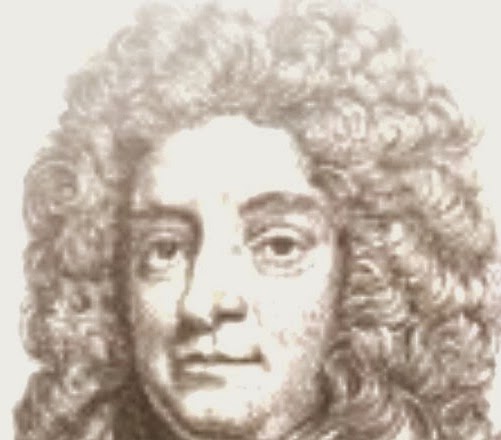
Sir Hans Sloane (16 April 1660 – 11 January 1753)

Hans Sloane was born in 1660, in County Down Ireland, where his father - a Scotchman – was Receiver-General of Taxes.

Hans, the youngest of seven brothers, was an intelligent child, devoted to natural history. He came to London under the guidance of Robert Boyle, the chemist to study botany and physic. He studied chemistry at Apothecaries Hall in London from 1679, taking particular interest in medical botany.

Having spent four years in London with unremitted attention to his favorite studies, he was advised to travel for further improvement.
In 1683 he toured France studying anatomy, medicine and botany and received his degree of Doctor of Medicine later the same year.

He frequented the hospitals, contracted an acquaintance with the most distinguished physicians an every where he experience that reception which is due to science and to talents.

Later he became physician to Christ’s Hospital and secretary of the Royal Society, of which he revived the ‘Transaction’.

In 1687 he was made a fellow of the Royal College of Physicians. It was at that time that he was invited to travel to Jamaica as personal physician to the new governor.

In 1716, George I made him a baronet – the first physician to receive that honor. In 1719 he was elected President of the College of Physicians succeeded Sir Isaac Newton, and held the office for fifteen years.
Sir Hans Sloane (16 April 1660 – 11 January 1753)

Wednesday, June 18, 2014

James Parkinson

James Parkinson’s was born on April 11, 1755 to John and Mary Parkinson. They resided at No. 1 Hoxton Square in the parish of St. Leonard’s Shoredicth, Middlesex County, England, where Parkinson lived his entire life.

He was born into the medical tradition, as his father John Parkinson was an apothecary and surgeon in Hoxton for many years.  His father had an enduring influence on him as a mentor, as James greatly valued the knowledge on anatomy that his father emphasized.

Parkinson studied at the London Hospital Medical College for six months in1776 as one of the school’s earliest medical students. He became an apprenticeship with his father which lasted 6 years before received his diploma from the Royal College of Surgeon.

James Parkinson made significant contributions to the medical literature beyond the Essay on the Shaking Palsy. These included books, monographs, and cases studies written for physicians and the lay public, some of which are worth mentioning.

He published in 1799 two editions of a medical text titled Medical Admonitions Addressed to Families Respecting the Practice of Domestic Medicine and the Prescription of Health.

In this book, James had tabulated the symptoms of diseases and the extent of risk of each illness in order for layperson to understand the distinction of one disease from another.

He became a distinguished physician and the first recipient of the honorary gold medal of the Royal College of Surgeon in1822.

James Parkinson died from stroke at the age of 69 on December 21, 1824, at No. 3 Pleasant Row, Kingsland Road, Hoxton.
James Parkinson

Thursday, December 05, 2013

Avempace

Avempace or Ibnu Bajjah, his full name Abu Bakr Muhammad ibn Yahya al-Saigh was born in Saragossa in Aragon, Spain in 500 AH/1099 AD and died in Fez, Morocco. He was educated at Fez and moved to Seville in 1118, where he lived until his death.

Avempace was the first notable philosopher and physician of Muslim Spain. He is credited with the extensive knowledge of medicine, mathematics, astronomy and music.

He was a creative and iconoclastic thicker, an instigator of the ‘Andalusia revolt’, who operated an observatory on his own and made original contribution to physical theory, with his account of projectile motion.

Avempace did not accept the Aristotelian principle that the velocity of an object is in inverse ratio to the resistance of the medium and therefore, a motion in void would be infinite, and so impossible.

He was the precursor of Averroes, on whom he had decisive, if indirect influence.

Before his death in 1139, he had written on all the disciples just cited, as well as on music.

His book Regime of the Solitary was an international classic and his philosophical writings were translated into several European languages and promptly initiated several scholarly debates throughout Europe.

He died at a comparatively early age, poisoned, according to tradition, by his own physicians who were jealous of his medical prowess.
Avempace

Monday, May 27, 2013

The Avicenna (980-1037)

His name Abu Ali al-Husain ibn Abdallah ibn Hasan ibn Ali ibn Sina was born into a Persian family in the village of Afshana, near Bukhara in the year 980.

Ibn Sina, commonly known as Avicenna , was an Islamic philosopher and physician.

The Persian Avicenna was a child prodigy. By the age of 10 he could recite the Qur’an by heart. That Avicenna has mastered the Qur’an by memorizing it at such an early age is evidence of his amazing memory.

By age 18, he was an expert in Islamic law and in medicine. His first appointment was that of physician to the emir, who owed him his recovery from a dangerous illness. Avicenna’s chief reward for this service was access to the royal library of the Samanids, well known patrons of scholarships and scholars.

He practiced medicine in Baghdad and published the Canon, codification of Greek and Arabic medicine.

Translation of this work were appearing until the 17th century the last edition being printed in 1663.

Apart from his medical texts, he is best known for his attempts to synthesis Islamic theology and Greek philosophy.

He authored some 450 books on a wide range of subjects many of which concentrated on philosophy and medicine.
The Avicenna (980-1037)

Wednesday, June 15, 2011

Biography of Soranus of Ephesus

Among many Greek immigrant surgeons was Soranus of Ephesus (AD 90 – 138), who studied in Alexandria where he practiced as a physician. His name flourished under the Roman emperor Hadrian.

He was celebrated both as a teacher and practitioner; and is admitted to have been the blest exponent of the Methodic doctrines, which h carried to their highest degree of popularity.

As well as writing on fractures and skull injuries, Soranus can be regarded as one of the founders of obstetrics.

He introduced the birth stool, which had supports for the back and arms and crescent shaped aperture.

He also described the necessity of emptying the bladder before delivery of the baby. He was the first to advocate washing the eyes of the new born with oil; he also instructs on tying the umbilical cord with a double knot before cutting it.

He writes on nursing and weaning: he recommends that only boiled honey be given the infant on the first two days, with nursing only to begin on the third day.
Biography of Soranus of Ephesus

Thursday, October 16, 2008

Hippocrates: Father of Medicine

Hippocrates: Father of Medicine
Hippocrates is referred to ‘father of medicine’ in recognition of his lasting contributions to the field as the founder of the Hippocratic school of medicine.

Hippocrates was born to Heraclides, a physician and Praxitela, daughter of Phenaretis in year of 460 BC on the Greek island of Cos. He learned medicine from his own father and grandfather. He also studied other subject with Democritus the Abderite and Gorgias of Leontini. Democritus was famous Greek materialist philosopher while Gorgias was famous philosopher and rhetorician at that time. Hippocrates also trained at asklepieion (healing temple) of Kos and took lessons from Thracian physician Herodicus of Selymbria. Herodicus was Greek physician famous as the first person use of therapeutic exercise for treatment of disease and maintenance of health. Herodicus was described as gymnastic master.

Hippocrates later became a famous physician and teacher of medicine. He was regarded as the greatest physician of his time. He based his medical practice on observations and on the study of the human body. He held the belief that illness had a physical and a rational explanation. Hippocrates held a belief that the body must be treated as a whole and not just a series of parts. Hippocrates was the first to give the physician an independent standing, separate from the cosmological speculator, or nature philosopher. Hippocrates confined the medical man to medicine.

He soon developed an Oath of Medical Ethics for physician. He died in 377 BC at the age of 90 years old. Some says at the age of 83 or 106 years He lies buried between Gyrton and Larissa.
Hippocrates: Father of Medicine

5 most popular articles